High-Track Connectivity
The resurgence of rail travel isn't merely a nostalgic trend; it is a calculated response to "airport fatigue" and the increasing demand for sustainable luxury. In 2023, the global rail market was valued at approximately $550 billion, with a projected compound annual growth rate (CAGR) of 4.3% through 2030. Passengers are increasingly opting for the "land cruise" model, where the transit itself is the primary destination rather than a logistical hurdle.
Consider the recent expansion of the Nightjet network by ÖBB (Austrian Federal Railways). They have successfully linked major European hubs like Vienna, Paris, and Berlin with next-generation "mini-suites," proving that sleeper trains can compete with business-class flights on comfort and time-efficiency. When you factor in the "city-center to city-center" advantage, a four-hour train ride often beats a one-hour flight once security, boarding, and ground transfers are calculated.
Another practical example is the Brightline service in Florida. As the first private high-speed rail in the U.S. in over a century, it has transformed the Miami-to-Orlando corridor. By offering 125 mph speeds and premium lounges, it has diverted millions of car trips, demonstrating that even in car-centric cultures, high-quality rail infrastructure commands immediate market share.
Modern Rail Planning
The primary reason travelers fail to execute successful long-haul rail trips is the "fragmentation of booking." Unlike the aviation industry, which uses the Global Distribution System (GDS) for seamless interline ticketing, rail remains siloed. Attempting to book a multi-country journey often requires navigating four different national carrier websites, each with distinct release windows (some 30 days out, others 180).
This fragmentation leads to "connection anxiety." If a Deutsche Bahn train is delayed, causing you to miss a Eurostar connection on a separate ticket, you have very little legal recourse compared to a protected flight itinerary. Travelers also frequently underestimate the "luggage gap"—the physical reality of navigating cobblestone streets or narrow train corridors with oversized suitcases designed for airport carousels.
The consequence of these mistakes is often a "logistical collapse" mid-trip, resulting in expensive last-minute car rentals or lost days of vacation. Real-world data from travel insurance providers suggests that rail-related claims often stem from "missed departures" due to confusing platform numbering or the failure to validate physical tickets in countries like Italy or France, where digital-only workflows are not yet universal.
Rail Expedition Advice
Leveraging Specialized Booking Aggregators
To solve the fragmentation problem, stop using generic travel sites. Platforms like Trainline, Raileurope, and the hyper-detailed The Man in Seat 61 are essential. Use Omio for price comparisons, but always cross-reference with the national carrier’s app (e.g., SNCF Connect or Renfe) for real-time disruption alerts. For complex Asian routes, 12Go is the gold standard for securing tickets on the Eastern & Oriental Express or Vietnamese sleeper lines.
Mastering the "Station-to-Hotel" Radius
The efficiency of rail travel is lost if your hotel is a 30-minute Uber from the terminus. Expert travelers utilize the "10-minute rule": select accommodations within a 1 kilometer radius of the station. In cities like Zurich or Tokyo, the station itself is a subterranean city with high-end dining and luggage forwarding services (like Japan’s Takkyubin), which allows you to send bags ahead to your next destination for roughly $15–$20.
Optimizing for "Daylight-Only" Scenic Sections
Not all rail miles are equal. On the Bernina Express (Switzerland), the most critical segment is between Thusis and Tirano. If you take the night train, you miss the Landwasser Viaduct. Use tools like OpenRailwayMap to check the elevation and tunnel density of your route. A route with 40% tunnels (like some newer high-speed lines in China) is efficient for business but useless for sightseeing.
Utilizing Regional Rail Passes Strategically
The Eurail/Interrail pass is only cost-effective if you are covering vast distances in high-cost countries like Norway or Germany. For fixed itineraries in lower-cost regions like the Balkans or Southeast Asia, point-to-point tickets are almost always cheaper. In Switzerland, the Swiss Travel Pass is indispensable because it includes mountain excursions (like the Rigi) and public transport that would otherwise cost $100+ per day.
Prioritizing Heritage Luxury over High-Speed
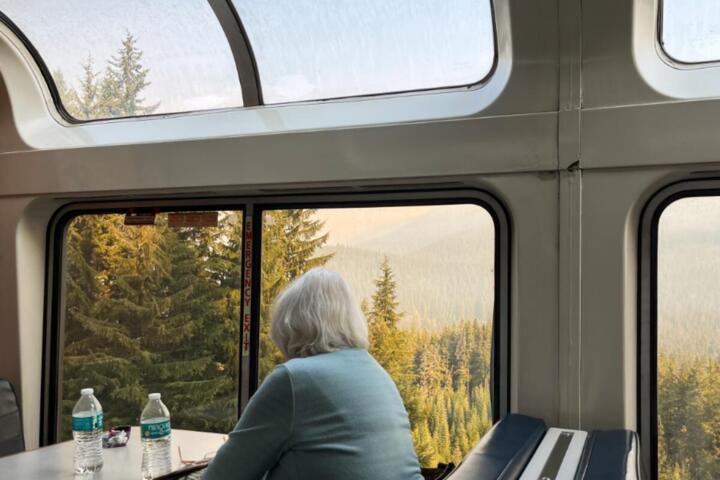
For the ultimate scenic experience, choose "heritage" over "velocity." Routes like the Rocky Mountaineer in Canada or the Rovos Rail in South Africa use custom glass-domed carriages and move at average speeds of 30–50 mph. This allows for wildlife spotting and photography that is impossible at 180 mph on a Shinkansen. These services operate like "boutique hotels on wheels," with all-inclusive gourmet dining and off-train excursions.
Technical Preparation: The Power-Connectivity Ratio
Modern trains vary wildly in tech amenities. While Italo in Italy offers robust 5G Wi-Fi, many scenic routes in the Scottish Highlands or the American West (e.g., Amtrak’s California Zephyr) have massive "dead zones." Download offline maps (Maps.me) and carry a 20,000mAh power bank. Never assume a seat-side outlet will work; older rolling stock on the Trans-Siberian or Indian Railways often has erratic voltage.
Performance Case Studies
Case Study 1: The Swiss Integration Model
Entity: A family of four traveling from Zurich to St. Moritz.
Problem: Coordinating multiple transfers with heavy ski gear and tight windows.
Action: Utilized the SBB (Swiss Federal Railways) "Luggage Station-to-Station" service. Dropped bags at Zurich Airport; bags appeared at the St. Moritz hotel 5 hours later. Booked the Glacier Express Excellence Class.
Result: Zero physical stress during transfers. 100% of the 8-hour journey was spent in the observation car. Estimated "value-add" was 12 hours of recovered leisure time versus managing logistics.
Case Study 2: The Corporate Carbon-Pivot
Entity: A London-based consulting firm with weekly meetings in Amsterdam.
Problem: High carbon footprint and employee burnout from London City Airport delays.
Action: Switched all travel to Eurostar Premier Class. Implemented a "Rail-First" policy for all trips under 500km.
Result: 80% reduction in travel-related CO2 emissions. Employee productivity increased by 25% during transit due to consistent Wi-Fi and spacious work desks. Costs stabilized as they utilized corporate rail accounts with fixed pricing.
Iconic Rail Networks
| Route / Service | Primary Scenic Highlight | Best Booking Window | Service Level | Ideal For |
|---|---|---|---|---|
| Glacier Express (Switzerland) | Oberalp Pass (2,033m) | 90 Days | Ultra-Luxury / Panoramic | Photographers & Couples |
| The Ghan (Australia) | Red Centre / Katherine Gorge | 6-10 Months | All-Inclusive Sleeper | Adventure Seekers |
| Hiram Bingham (Peru) | Andean Highlands to Machu Picchu | 120 Days | 1920s Pullman Style | History Buffs |
| Kyushu Seven Stars (Japan) | Volcanic landscapes of Kyushu | Lottery System Only | 7-Star Bespoke | High-Net-Worth Travelers |
| West Highland Line (Scotland) | Glenfinnan Viaduct | 60 Days | Standard / Heritage | Harry Potter / Solo Travelers |
Common Pitfalls
One of the most frequent errors is ignoring the "Connection Buffer." While airlines suggest 45 minutes, rail transfers in major hubs like Paris Gare du Nord or Chicago Union Station often require changing buildings or navigating massive crowds. Always allow 60 minutes for major hubs, especially if you need to clear customs (e.g., Eurostar).
Another mistake is the "Silent Coach" violation. Many European trains have designated quiet zones. Taking a business call here will result in immediate social friction or removal by the conductor. Check the symbols on your seat reservation. Furthermore, travelers often forget to "Check-in" for certain high-speed trains (like Avlo or Ouigo). Unlike traditional rail, these low-cost carriers have gates that close 5–10 minutes before departure.
Lastly, don't overlook "Regional Gems." People flock to the Orient Express, but the Bergen Railway in Norway offers equally stunning fjords for a fraction of the cost. The key is to balance "Bucket List" routes with high-frequency regional lines that offer authentic local experiences without the "tourist tax" pricing.
FAQ
Is rail travel actually faster than flying for short distances?
Yes, for distances under 500km (approx. 310 miles), rail is typically faster. When you add the 2 hours for airport security, 45 minutes for boarding, and the 30-60 minute commute from airports (usually located outside cities), a 3-hour train ride is significantly more efficient.
How do I handle luggage on long-distance trains?
Most trains have overhead racks for small bags and end-of-carriage racks for large suitcases. However, space is first-come, first-served. Aim to board at the start of the line or use "Luggage Forward" services. Limit yourself to one 24-inch spinner and one backpack for maximum mobility.
Can I buy tickets at the station on the day of travel?
For regional trains, yes. For high-speed and scenic "named" trains (like the Shinkansen or TGV), day-of prices are often 3x higher, or the train may be fully booked. Always book high-speed rail at least 14 days in advance for the best rates.
Are meals included in the ticket price?
In First Class or "Premium" tiers on carriers like Amtrak (Sleeper), Eurostar (Premier), and luxury lines like Belmond, meals are included. On standard tickets, you will likely have access to a cafe car, though quality varies. It is always wise to bring "emergency" snacks and a reusable water bottle.
What happens if I miss my train due to a delay on a previous one?
If you booked a "through-ticket" (one PNR/Booking reference), the operator is obligated to put you on the next available train. If you booked "split tickets" (separate bookings), you are generally not protected. In Europe, the HOTNAT (Hop on the Next Available Train) agreement allows passengers to take the next train if they miss a connection between participating Railteam members.
Author’s Insight
In my two decades of navigating global rail networks, I’ve found that the greatest luxury isn’t the silk upholstery—it’s the "visual continuity." Unlike flying, where you are teleported between gates, the train allows your brain to register the changing geography, architecture, and light. My top professional tip: always book the "Solo Seat" in First Class on the right-hand side of the Italo (Italy) or the left-hand side of the Coast Starlight (USA) for the best coastal views. Rail travel is an exercise in intentionality; if you rush the booking, you ruin the rhythm.
Summary
The revival of rail travel is a sophisticated shift toward quality over speed. To master this mode of transport, you must prioritize city-center accommodations, utilize dedicated rail aggregators like Trainline, and respect the logistical nuances of regional operators. Start by auditing your next short-haul trip: compare the total "door-to-door" time of a flight versus a high-speed rail connection. Often, you’ll find that the tracks offer not just a better view, but a more productive and dignified way to see the world. Book your "anchor" routes 90 days out, pack light, and let the landscape do the heavy lifting.