International Transit
Global mobility has shifted from a "pack-and-go" mindset to a complex logistical operation requiring digital literacy and proactive planning. Understanding the nuances of cross-border regulations is the difference between a smooth transition and being denied boarding at the gate.
Consider the "Visa on Arrival" trap: many travelers assume this applies to all passports, yet a 2023 IATA report highlighted that documentation errors account for nearly 40% of international travel delays. For instance, traveling to Vietnam requires an E-visa processed days in advance, not just a valid passport.
In practice, a well-prepared traveler uses a "three-pillar" system: Digital Redundancy (cloud backups), Financial Elasticity (multiple payment rails), and Health Compliance. Statistically, 1 in 4 international travelers will encounter a minor medical issue or a flight disruption; preparation reduces the recovery time for these events from days to hours.
Readiness Failures
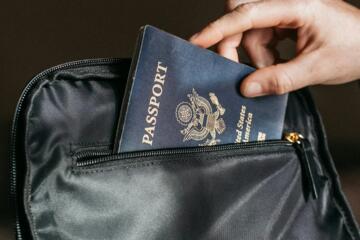
The most common mistake is the "Six-Month Rule" oversight. Many countries, including most of the Schengen Area and Southeast Asia, refuse entry if your passport expires within six months of your arrival date. Relying on the printed expiration date without checking destination-specific entry requirements is a recipe for disaster.
Another pain point is "Financial Blindness"—failing to notify banks of international movement. Fraud detection algorithms are increasingly aggressive. A traveler landing in Tokyo without a local SIM or a pre-notified bank card can find themselves unable to pay for a train, with their only source of funds frozen due to "suspicious activity."
Real-world consequences are often expensive. Emergency passport replacements at an embassy can cost upwards of $150 plus travel expenses to the nearest consulate, while last-minute medical evacuations for the uninsured can exceed $50,000. These are not rare anomalies; they are daily occurrences for the under-prepared.
Travel Solutions
1. Implementing Digital and Physical Document Redundancy
Never rely solely on a physical passport or a single smartphone. Standard operating procedure should include high-resolution scans of your passport bio-page, visas, and vaccination records stored in an encrypted cloud service like Proton Drive or Google Drive with offline access enabled.
Additionally, carry two physical photocopies: one in your carry-on and one in your checked luggage. This ensures that if your phone dies and your bag is stolen, you still have the document numbers required to expedite assistance at a consulate.
2. Financial Infrastructure and Currency Resilience
Diversify your "wallet" across at least three distinct platforms. I recommend carrying a premium credit card with no foreign transaction fees (like the Chase Sapphire Preferred), a fintech debit card for mid-market exchange rates (Revolut or Wise), and $200 in crisp, small-denomination US Dollars.
Using Wise allows you to hold "Local Jars" in currencies like EUR, GBP, or JPY, avoiding the 3-5% markup typical of traditional banks. Always choose "Decline Conversion" at foreign ATMs to let your bank handle the rate, saving an average of $7–$12 per transaction.
3. Cybersecurity and Connectivity Protocols
Public Wi-Fi in airports is a primary vector for credential theft. Before departure, install a reputable VPN such as NordVPN or Mullvad to encrypt your data. Furthermore, move away from physical SIM cards which are easily lost or overpriced at kiosks.
Use an eSIM provider like Airalo or Holafly. You can purchase and install a data plan for your destination while still in your home country. For example, a 10GB plan in Turkey costs around $18 via eSIM, compared to $10/day roaming fees charged by carriers like Verizon or AT&T.
4. Health Logistics and Insurance Verification
Generic "travel insurance" included with credit cards often lacks primary medical coverage. Ensure your policy includes at least $100,000 in emergency medical coverage and $500,000 for medical evacuation. Services like World Nomads or SafetyWing cater specifically to international transients.
If you carry prescription medication, you must have the original prescription and a doctor's letter. Countries like Japan have strict "Yakkan Shoumei" rules for certain stimulants and painkillers that are common in the West but illegal there without prior permit.
5. The Smart Packing and Luggage Tech Approach
Overpacking is a mobility killer. Use compression packing cubes (Eagle Creek is the industry gold standard) to categorize gear. More importantly, place an Apple AirTag or Tile tracker in every bag. In 2024, mishandled baggage rates rose by nearly 15% globally; knowing your bag is in Munich while you are in Rome allows you to force airline action faster.
Performance Cases
Case Study A: The Digital Nomad in Bali
A freelance consultant traveled to Indonesia with only one bank card. Upon arrival, the ATM swallowed the card due to a technical glitch. Problem: Zero access to cash or local transport. Solution: Because he had a backup Wise account on his phone, he used Apple Pay to fund a Grab (ride-sharing) account and ordered a replacement card to his villa within 3 days. Result: Avoided total itinerary collapse and saved approximately $400 in emergency wire fees.
Case Study B: The European Multi-City Tour
A family of four traveling through the Schengen Area faced a 12-hour flight cancellation in Frankfurt. Problem: Unexpected hotel and meal costs. Solution: They had documented their "Statement of Coverage" from their insurance provider. Result: They claimed $800 in subsistence expenses ($200 per person) under the "Trip Delay" clause, receiving full reimbursement within 14 days. Without the pre-departure insurance check, this would have been an out-of-pocket loss.
Departure Checklist
| Category | Task Item | Priority & Tools |
|---|---|---|
| Legal | Passport 6-month validity | Critical. Official Portals. |
| Financial | No Foreign Fee cards | High. Wise, Revolut. |
| Health | Medical Evacuation Insurance | High. SafetyWing. |
| Digital | Offline Maps & eSIM | Medium. Google, Airalo. |
| Security | Register with STEP | Medium. Smart Traveler Prog. |
Pitfalls & Prevention
One overlooked error is the "Check-in Window." For international flights, online check-in often requires uploading visa documentation. Doing this 24 hours in advance uncovers potential "OK to Board" issues that can be fixed via phone, rather than facing a closed desk at the airport.
Avoid the "Local Currency Kiosk" at arrivals. These booths offer the worst possible rates, often losing you 15-20% of your value. Instead, use an airport ATM associated with a major bank (e.g., HSBC, Santander) and use your fintech card to withdraw only what is necessary for the first 24 hours.
Finally, don't ignore the "Power Grid." Many travelers forget that a Type G plug (UK) won't work in Type C (Europe). Invest in a universal GaN (Gallium Nitride) fast charger with multiple USB-C ports. This replaces four separate bricks and handles 100V–240V automatically, preventing your electronics from frying in regions with unstable voltage.
FAQ
How far in advance should I start my travel checklist?
Start at least 8 weeks prior. This allows sufficient time for passport renewals (which can take 6-12 weeks) and specialized vaccinations like Yellow Fever that require 10 days to become effective.
Is travel insurance really necessary for short trips?
Yes. A simple slip and fall resulting in a broken leg in a private international hospital can cost $10,000+. Insurance for a week-long trip often costs less than a single dinner out.
How do I handle my phone plan without getting a huge bill?
Turn off "Data Roaming" on your primary SIM before you land. Use an eSIM for data and use WhatsApp or Google Voice for calling over data to avoid international per-minute charges.
What are the essential documents to keep in my carry-on?
Your passport, printed boarding pass (as a backup), proof of onward travel (required by many immigration officers), and your first night's hotel address.
Can I use my domestic driving license abroad?
In many countries, you need an International Driving Permit (IDP) alongside your valid license. You can usually obtain this from your local AAA or automobile association for about $20.
Author’s Insight
In my fifteen years of traversing over 70 countries, I have learned that "expecting the best but documenting the worst" is the only way to travel sustainably. I once lost my physical wallet in the middle of Marrakech; it was the digital backup of my credit cards and the $100 hidden in my shoe that saved the trip. My top piece of advice is to never leave the tarmac without a confirmed "Arrival Strategy"—know exactly how you are getting from the airport to your bed without needing to ask for a Wi-Fi password. This tiny bit of momentum prevents 90% of travel stress.
Summary
Success in international travel is built on a foundation of redundancy and proactive research. By auditing your passport validity, diversifying your financial tools with services like Wise, and securing robust insurance through providers like SafetyWing, you transform from a vulnerable tourist into a resilient traveler. Start by scanning your documents today and verifying the visa requirements for your next destination; the effort spent now is an investment in your future peace of mind.