Global Coffee Landscape
Coffee is no longer a mere commodity; it is a cultural signifier that dictates social structures across continents. In the high-altitude regions of Ethiopia, coffee is a communal rite that can last over two hours, while in the bustling hubs of Australia, it is a high-precision science involving refractometers and water chemistry. Understanding these nuances requires looking at the Global Coffee Platform data, which indicates that specialty coffee now accounts for over 20% of the market value despite smaller volume yields.
In practice, this means a roaster in Oslo might aim for a "Nordic light" profile to preserve the acidity of a washed Kenyan SL28, whereas a traditional roaster in Naples prioritizes the Maillard reaction for a syrupy, chocolate-heavy profile. Real-world statistics show that the average consumer in Scandinavia consumes nearly 9kg of coffee per capita annually, the highest in the world, shifting the focus from quantity to the chemical stability of the roast.
Modern Consumption Issues
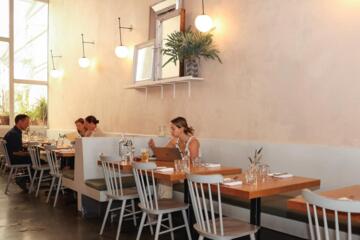
The primary issue facing the global coffee community is the "homogenization of taste." Many cafes attempt to replicate a specific aesthetic—often the minimalist "Melbourne style"—without understanding the local water chemistry or supply chain logistics. This leads to under-extracted, sour beverages that miss the intended flavor notes of the bean.
Furthermore, there is a significant lack of transparency in the "Fair Trade" labeling system. Research from the SCA (Specialty Coffee Association) suggests that "Direct Trade" models often result in 50-70% higher payouts to farmers compared to standard certifications. When consumers buy blindly based on marketing buzzwords, they inadvertently support unsustainable farming practices that threaten the genetic diversity of Arabica plants by 2050.
Finally, the "over-automation" of household brewing often results in stagnant water reservoirs and uncalibrated grinders. A grinder with dull burrs produces inconsistent particle sizes (fines and boulders), leading to a cup that is simultaneously bitter and watery—a phenomenon known as uneven extraction that ruins even the most expensive Geisha beans.
Brewing Strategies
Mastering the Ethiopian Ceremony Ethics
To honor the origins of coffee, focus on "Buna Tetu." This isn't just about drinking; it's about the three stages: Abol, Tona, and Baraka. In a modern setting, this translates to utilizing dry-processed (natural) beans from regions like Yirgacheffe or Sidamo. These beans undergo fermentation within the cherry, resulting in heavy floral and blueberry notes that are best expressed through immersion brewing methods like the French Press or Clever Dripper.
Applying Melbourne's Technical Precision
Melbourne's coffee culture is built on the "Flat White" and meticulous espresso ratios. To replicate this, use a scale with 0.1g sensitivity, such as the Acaia Lunar. Aim for a 1:2 ratio (e.g., 18g in, 36g out) within 27 to 30 seconds. Australian baristas frequently use "frozen beans" to preserve volatile aromatics, a technique backed by research from the University of Oregon showing that colder beans grind more uniformly.
Adopting the Italian Espresso Standard
While the third wave pushes for light roasts, the Italian tradition focuses on "Crema" and mouthfeel. Authenticity here requires a blend containing a small percentage of high-quality Robusta (around 10-20%) to increase body and caffeine content. Brands like Lavazza or Illy have mastered this consistency, but for an artisan approach, look for "Southern Italian" roasts that stop just before the second crack to avoid burnt carbon flavors.
Implementing Nordic Light Roast Profiles
Scandinavian culture values clarity. Use high-quality paper filters, such as Sibist or Hario V60, to remove oils and sediment. This highlights the "terroir"—the specific environmental factors of the farm. Results from Tim Wendelboe’s sourcing experiments show that light roasting increases the perceived sweetness (sucrose retention) if the green coffee has high density and is grown at 1,800+ meters above sea level.
Integrating Traditional Turkish Sand Brewing
For the "Cezve/Ibrik" method, the grind must be finer than espresso—literally powder-like. Using a Comandante C40 or an electric Mahlkönig EK43 is essential for this level of precision. The foam (köpük) is the indicator of quality; if the water exceeds 95 degrees Celsius before pouring, the delicate oils are destroyed. This method produces the highest antioxidant concentration due to the lack of filtration.
Navigating the Vietnamese Phin Filter Culture
Vietnam is the king of Robusta. To achieve the authentic "Cà Phê Sữa Đá," use a stainless steel Phin filter and sweetened condensed milk (like Longevity brand). The key is the slow drip; it should take 4 to 5 minutes. This creates a high-viscosity extraction that balances the natural bitterness of the Robusta bean, which has nearly double the chlorogenic acid of Arabica.
Cultural Evolution
Case Study 1: The Transition of a Traditional Parisian Café
A historic café in Le Marais, Paris, was losing revenue to modern specialty shops. They traditionally served "burnt" dark roasts with high bitterness. By partnering with Belleville Brûlerie, they switched to a medium-dark "omni-roast" and retrained staff on milk texturing. Within six months, their "Grand Crème" sales increased by 40%, and they reduced milk waste by 15% through precision steaming techniques.
Case Study 2: The Sydney Espresso Bar Efficiency Model
A high-volume espresso bar in Sydney faced inconsistency during morning rushes. They implemented Puqpress (automatic tamping) and Victoria Arduino gravimetric machines. By removing human error in tamping pressure and output weight, they achieved a 98% consistency rating across 500+ daily shots, leading to a 22% increase in returning customers who valued the predictable flavor profile.
Regional Analysis
| Region/Style | Primary Method | Roast & Flavor | Equipment focus |
|---|---|---|---|
| Ethiopian | Jebena (Immersion) | Med/Dark. Floral, Berry. | Clay Pot |
| Australian | Espresso | Light/Med. Caramel, Clean. | Gravimetric |
| Scandinavian | Pour-over | Ultra-Light. Acidic. | Precision Grinders |
| Turkish | Cezve (Decoction) | Medium. Spicy, Intense. | Copper Pot |
| Vietnamese | Phin (Drip) | Dark. Bold, Nutty. | Metal Filter |
Correcting Errors
One common error is using tap water for brewing. Coffee is 98% water; chlorine and high mineral content can mute flavors or cause harsh metallic notes. Use a Peak Water filter or Third Wave Water mineral packets to achieve the ideal 150ppm (parts per million) hardness. This ensures the solvent properties of the water effectively extract the soluble solids from the grounds.
Another mistake is storing coffee in the freezer in its original packaging. Once opened, the beans are exposed to oxygen and moisture. Instead, use vacuum-sealed canisters like the Fellow Atmos. Oxidation happens exponentially; a bag of coffee can lose 50% of its aromatic complexity within 72 hours of being ground.
Finally, ignoring the "Roast Date" is a critical failure. Freshness is vital, but "too fresh" is also an issue. Espresso needs at least 7 to 10 days of "degassing" to allow CO2 to escape; otherwise, the gas creates bubbles that prevent water from fully saturating the coffee puck, leading to "channeling."
FAQ
Which country has the most authentic coffee culture?
Authenticity is subjective. Ethiopia is the "cradle" of coffee with the most ancient traditions, while Italy defined the "second wave" espresso standards used worldwide today.
Why does Australian coffee taste different from US coffee?
Australia focuses heavily on high-quality milk texturing (micro-foam) and lighter roast profiles for espresso. In contrast, many US chains prioritize larger volumes and darker roasts for consistency across thousands of locations.
Is Robusta coffee always lower quality than Arabica?
No. While commodity Robusta is often harsh, "Fine Robusta" is an emerging category. It offers higher crema and body, making it excellent for traditional espresso blends when grown and processed with care.
What is the best water temperature for brewing?
For light roasts, use water between 93°C and 96°C to extract complex acids. For darker roasts, drop the temperature to 88°C–91°C to avoid extracting bitter, ashy compounds.
What does 'Third Wave' actually mean?
It is a movement that treats coffee as an artisanal foodstuff rather than a commodity. It emphasizes transparency, sustainability, and the distinct flavor profile of specific coffee varieties and origins.
Author’s Insight
In my decade of evaluating supply chains, I’ve realized that the most "authentic" cup isn't the one with the fanciest equipment, but the one that respects the bean's journey. I recently visited a farm in Huila, Colombia, where the transition from "C-Market" (commodity) prices to specialty premiums changed an entire village's economy. My practical advice for any enthusiast is to stop looking at the brand on the front of the bag and start looking for the altitude, variety, and harvest date on the back. That is where the real story—and the real flavor—resides.
Summary
Navigating global coffee culture requires a balance of respecting ancient traditions and embracing modern technical standards. From the ceremonial origins in Ethiopia to the scientific precision of Melbourne’s cafes, the common thread is a commitment to quality and community. To elevate your experience, focus on water chemistry, invest in a high-quality burr grinder, and support roasters who provide transparent sourcing data. By moving beyond the "cup of joe" mentality, you contribute to a sustainable global ecosystem that rewards farmers and delivers a superior sensory experience.