Modern Exploration
The traditional tourism model is built on "curated convenience," where travelers pay a premium to see a filtered version of a country. True immersion, however, is found in the "backstage" of a city—the neighborhood squares where residents gather, the family-run workshops, and the markets where prices aren't listed in English. This isn't just about being "off-the-beaten-path"; it is about value-based travel that supports local economies directly.
According to a 2023 report by the UNWTO, "leakage" in tourism—where money spent by tourists leaves the local economy—can reach as high as 80% in some developing regions. By bypassing global hotel chains and pre-packaged tours, travelers can ensure their spending stays within the community. For example, staying in a Ryokan in rural Japan instead of a Western-style hotel in Tokyo can redirect up to 40% more revenue toward local artisans and farmers.
In practice, this looks like choosing a konoba in Croatia over a seaside restaurant with "Tourist Menu" signs. In 2022, data from spending patterns in Split showed that prices at establishments located just 300 meters away from the Peristyle were 35% lower, while food quality ratings (based on local reviews) were significantly higher.
Trip Planning Failures
The primary mistake travelers make is over-reliance on top-tier search results. Algorithms are designed to prioritize businesses with the highest marketing budgets, not the most authentic flavors. When you search for "Best things to do in Rome," you are viewing a list curated by SEO specialists, not locals. This leads to a "bubble" effect where you only interact with other tourists and staff trained to cater to them.
The consequence is a phenomenon known as "destination fatigue." You spend four hours in a queue for a museum only to find it overcrowded, leading to a sense of resentment rather than inspiration. This reliance on "must-see" lists creates a feedback loop where popular spots become even more congested, while nearby neighborhoods with rich history suffer from economic neglect.
Consider the "Venice Effect." Most visitors spend 90% of their time in the San Marco and Rialto areas. Consequently, these districts have lost over 50% of their permanent residents since the 1950s. By sticking to the "main circuit," travelers inadvertently contribute to the hollowing out of the very cultures they claim to admire.
Integration Frameworks
Leveraging Local Language Digital Platforms
To find where residents actually eat and socialise, stop using English-centric review sites. In Spain, use ElTenedor (The Fork) with Spanish filters; in China, navigate via Dianping; in Japan, rely on Tabelog. These platforms often have vastly different ratings than Western counterparts because they reflect local standards of quality and price. If a restaurant has a 3.5 on Tabelog, it is often superior to a 4.5-star spot on a global review site that caters to international palates.
The "Second City" and Fringe District Strategy
Instead of Paris, visit Lyon; instead of Tokyo, visit Fukuoka. If you must visit a major hub, apply the "Three-Stop Rule" on the metro. Travel at least three stops away from the historic center before choosing a place to dine. Data from AirDNA suggests that short-term rental prices drop by an average of 22% for every 2 kilometers you move away from a primary landmark, while the density of traditional grocers and independent bookstores increases.
Utilizing Skill-Sharing and Educational Platforms
Authenticity is often gated by skill. Use platforms like Eatwith or AirBnB Experiences—but filter specifically for "Social Impact" or "Traditional Craft." Participating in a communal Supra in Georgia (a traditional feast) or a pottery workshop in Safi, Morocco, provides a structured environment for dialogue. These interactions move the relationship from "service provider/customer" to "teacher/student," which is the foundation of genuine connection.
Experience Cases
Case Study 1: The Boutique Vineyard Pivot in Portugal
A small, family-owned vineyard in the Douro Valley was struggling to compete with large estates that had contracts with major cruise lines. They decided to stop offering "tasting flights" and instead launched a "Harvest Participation Day" via Withlocals. They charged 50% more than a standard tour but included a seat at the family dinner table. Within one season, their direct-to-consumer wine sales increased by 120%, and they maintained a 5-star rating based solely on "authenticity" metrics.
Case Study 2: Reclaiming the Souks in Marrakech
A group of travelers avoided the main square of Jemaa el-Fnaa for dining, opting instead to use a local guide from Radical Storage's community network to find a hidden "fondouk" (traditional inn). By spending their budget at a workshop that trains underprivileged youth in leatherworking, they acquired custom goods for 40% less than the "tourist price" in the main market. The result was a high-quality, ethical purchase and a three-hour conversation with the master artisan about the city's changing architecture.
Operational Checklist
| Phase | Action & Resources |
|---|---|
| Pre-Trip | Analyze "Heatmaps" for zone avoidance. (AirDNA / Google Maps) |
| Arrival | Setup local SIM/Apps. (Airalo / Orange / AIS) |
| Dining | Find "Menu del Dia" via Tabelog / ElTenedor. |
| Transport | Use public/regional rail. (Citymapper / Omio) |
| Interaction | Book "Skill-Based" events. (Eatwith / Workaway) |
Common Pitfalls
The most frequent error is "The Photography Trap." When you view a destination through a lens, you are looking for a composition, not a connection. To avoid this, set a "No-Phone Hour" during your explorations. Experience the sensory details—the smell of the street food, the sound of the local dialect—without the pressure to document it for social media. This presence often signals to locals that you are an observer, not just a consumer, often leading to more spontaneous invitations or tips.
Another mistake is the "Bargaining Aggression." While haggling is cultural in many places, pushing too hard for a few dollars can be disrespectful in areas where that amount represents a significant portion of a daily wage. Aim for a fair price, not the lowest price. A good rule of thumb is to research the "local price" beforehand on forums like Reddit (r/travel) or TripAdvisor forums (specifically the destination-specific ones), then aim for a price that feels equitable for both parties.
FAQ
How do I find authentic restaurants without English menus?
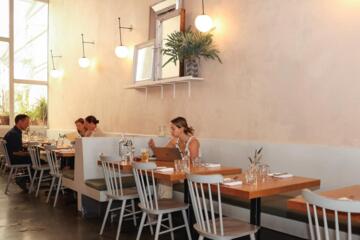
Look for places where the menu is handwritten or printed on a single sheet of paper. Use the Google Lens app to translate in real-time. If the clientele is predominantly local and the decor is functional rather than "themed," you have likely found a winner.
Is it safe to wander outside of the designated tourist zones?
In most global cities, "residential" does not mean "dangerous." Use common sense and check Numbeo’s crime index for specific neighborhoods. Often, the outskirts are safer than the centers, which can be hotspots for pickpockets targeting tourists.
How can I contribute to the local economy ethically?
Prioritize "Social Impact" tours. Many organizations, like Invisible Cities (which employs people who have experienced homelessness as guides), ensure that your money directly benefits the social fabric of the city.
What if I don't speak the local language?
Learning just five phrases—Hello, Please, Thank You, Excuse Me, and "The bill, please"—changes the dynamic of an interaction. It shows effort. Use DeepL for more complex needs, as its translations are often more nuanced and "human" than other major engines.
How do I find local events like festivals or pop-ups?
Check Eventbrite, Facebook Events (filtered by city), or local "What's On" magazines (like Time Out, but look for the local language edition). University bulletin boards are also goldmines for free or low-cost cultural lectures and performances.
Author’s Insight
In my fifteen years of navigating over sixty countries, I’ve found that the most memorable moments never happened at a "top 10" site. They happened when I got lost in the residential alleys of Hanoi or sat on a plastic stool in Mexico City. My best advice is to embrace the discomfort of not knowing exactly what is happening. Authenticity isn't a commodity you buy; it's a byproduct of curiosity and the willingness to be a "quiet guest" in someone else's home. Stop trying to "conquer" a city and start trying to understand it.
Summary
Finding authentic experiences requires a shift from passive consumption to active participation. By diversifying your digital toolkit, venturing beyond the three-mile radius of the city center, and prioritizing skill-sharing over sightseeing, you transform your travel from a series of photos into a series of insights. The next time you plan a trip, delete your "must-see" list and replace it with a "must-learn" goal. Start by booking a stay in a residential neighborhood today and commit to eating at least one meal a day where you don't recognize everything on the menu.